


A program offered every Wednesday
As part of their commitment to preserving alpine ecosystems, the Foehn Endowment Fund and the Compagnie du Mont-Blanc are offering a series of workshops dedicated to discovering and respecting wildlife during the winter season.
Exemples of topics covered :
– Animal biology and life: understanding animals better in order to respect them better.
– Adaptation strategies of mountain animals in winter: understanding the survival mechanisms of species in a demanding environment.
– Best practices: minimizing human impact on mountain wildlife
Workshops in pratice
Led by mountain guides from the Compagnie des Guides de Chamonix, these workshops combine educational and scientific approaches to bring together enjoyment of the mountains and the preservation of biodiversity. Each workshop is limited to a maximum of 10 participants.
Workshops are held every Wednesday from December 24, 2025 to March 25, 2026.
Each Wednesday, 4 workshops are offered:
– Montenvers: 10:30 a.m and 2:00 p.m
– Plan de l’Aiguille du Midi: 10:30 a.m and 2:00 p.m
Open to participants aged 8 and over, with no upper age limit.
Conditions: good physical fitness required and no contraindications to altitude.
Workshops are offered in French and English.
Animals are not permitted during the workshops.
There are no picnic rooms at either site. Please plan your meal before or after the workshop.
Your support for Foehn, through a voluntary contribution, helps fund its environmental initiatives.
Sites & Educational Objectives
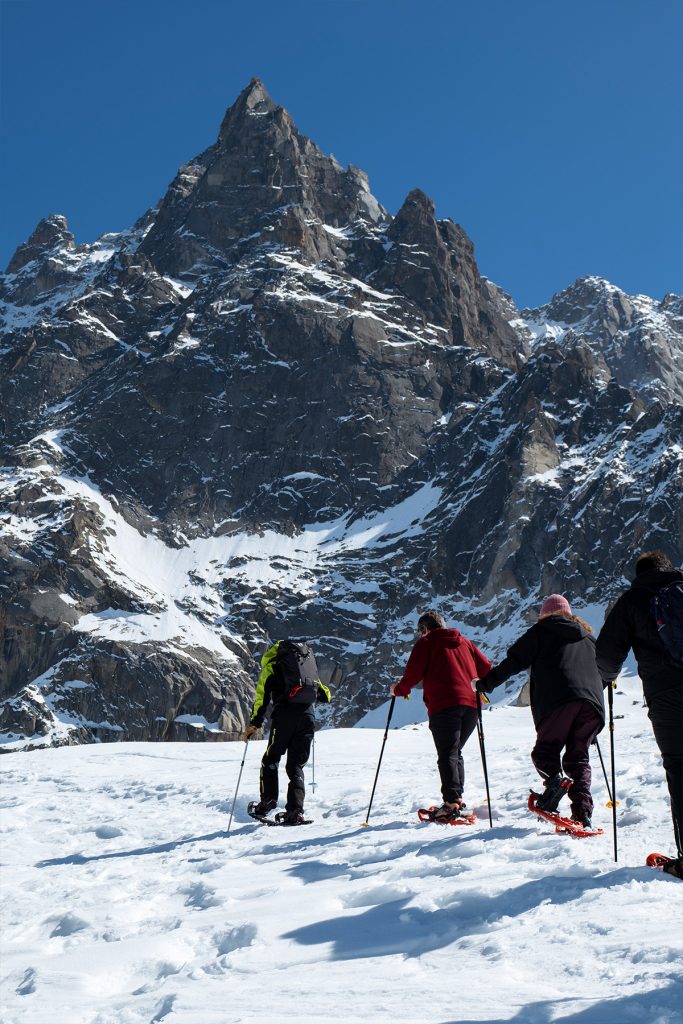
AIGUILLE DU MIDI – PLAN DE L’AIGUILLE SITE
Winter in the mountains:
– Effets of snow and cold on living organisms.
– Adaptation of fauna and flora to winter.
Winter disturbance:
– Impacts on metabolism and survival of animals.
– Best practices for observing without disturbing.
📅 Every Wednesday until March 25, 2026
🕙 10:30 a.m: Plan mid-station
🕙 2:00 p.m: Plan mid-station
Please plan to reserve your cable car.
⏳ approx. 1h30
📍 Meeting point outside the arrival station of the Plan de l’Aiguille du Midi,near the refreshment stand.
❄️ Equipment provided if needed (snowshoes and poles).
🎒 Bring warm gear, suitable boots, water, and snacks.
💶 Free participation with donations to Foehn – Lift ticket required (not included).
Registration mandatory (10 people max per workshop).)
MONTENVERS SITE
Mountain forest as a winter refuge for wildlife:
– Effects of snow and cold on living organisms.
– Adaptations of fauna and flora in winter.
– The forest’s role as an ecosystem in winter.
Winter disturbance:
– Climate change impacts on the ecosystem.
– Gestures and actions to help protect the environment.
– Good practices for observing without disturbing.
📅 Every Wednesday until March 25, 2026
🕙 10:30 a.m: Montenvers site (top)
🕙 2:00 p.m: Montenvers site (top)
Please allow 30 minutes to 1 hour to take the train beforehand.
⏳ approx. 1h30
📍 Meeting point outside the Montenvers arrival station, near the Glaciorium.
❄️ Equipment provided if needed (snowshoes and poles).
🎒 Bring warm gear, suitable boots, water, and snacks.
💶 Free participation with donations to Foehn – Lift ticket required (not included).
Registration mandatory (10 people max per workshop).)
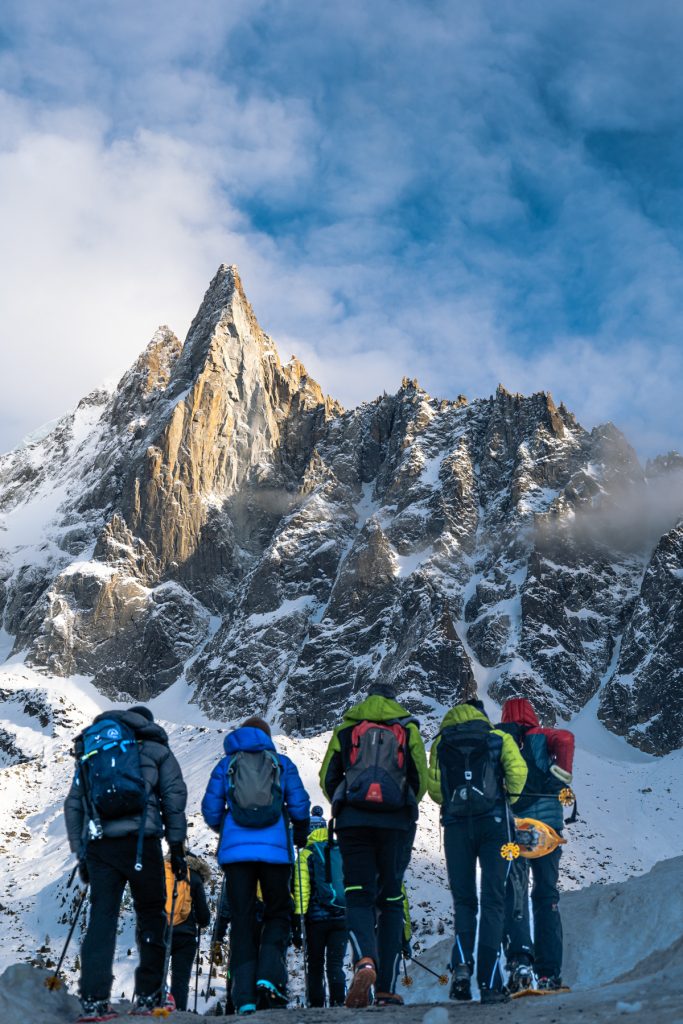
What is the Foehn Fund ?
The Foehn Endowment Fund (Fonds pour l’Environnement et la Haute Nature) supports actions in favor of the environment, particularly mountain environments. It helps make the Mont-Blanc region a sustainable territory that is attractive and proactive in the fight against climate change.
Foehn since 2021
Created on July 24, 2021, on the 200th anniversary of the Compagnie des Guides, the Foehn Fund acts to contribute to making the Mont-Blanc region a sustainable territory and engaged in climate action.
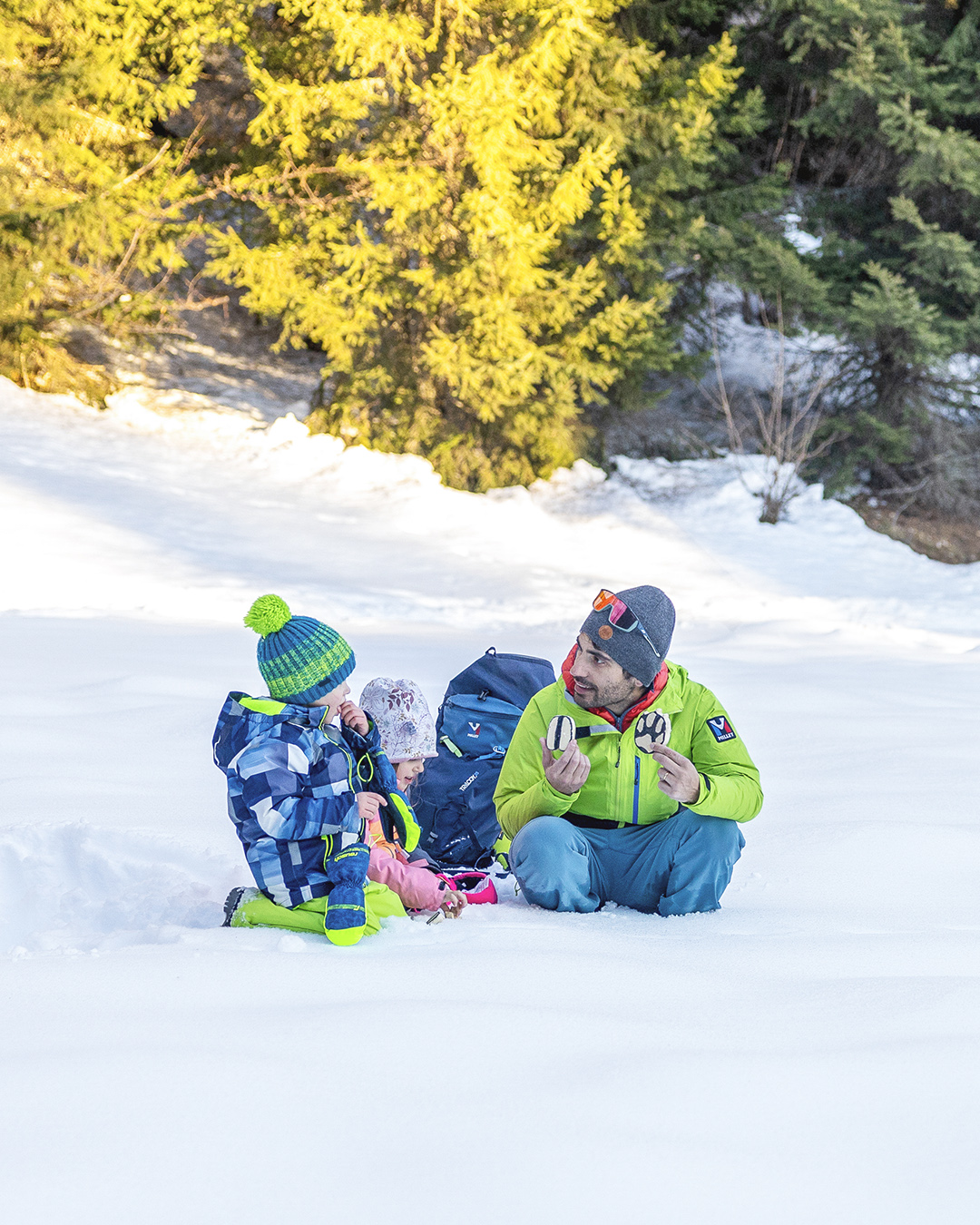
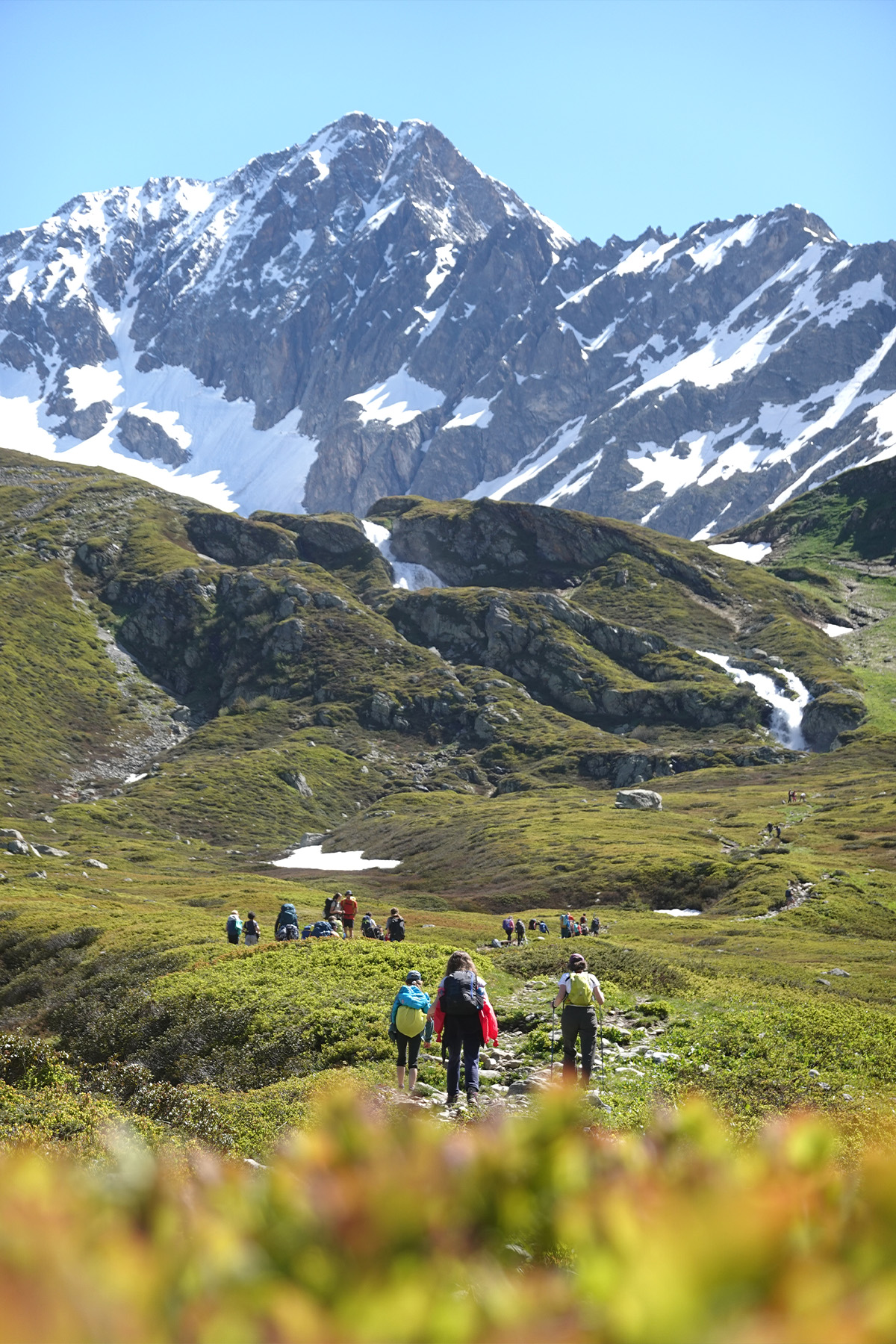
Sensitize and Preserve
The FOEHN Fund finances awareness and preservation actions. These include, for example:
– Setting up free educational programs.
– Supporting research projects.
– Restoring ecosystems.
Know and Protect the Mountains
Funding a free training cycle for children aged 10 to 12 from the Chamonix valley and St-Gervais-les-Contamines — where professional guides help them discover the mountain environment, the species that live there, and their habitats, while raising awareness of climate issues.



Bureau de Chamonix
Maison de la montagne
190 place de l’église
74400 Chamonix
Bureau d’Argentière
24 Route du village
74400 Argentière
Pages clés
Suivez-nous
Découvrir Chamonix